
What is Bank Blacklisting?
Bank Blacklisting is the process by which the Credit Information Bureau (CIB) records a borrower, guarantor or related party as a loan defaulter based on the recommendation of Bank and financial Institution.
What is the legal basis for Credit Information Bureau and Bank Blacklisting?
- Nepal Rastra Bank Act, 2058 — Sections 79 and 88 (authority to issue directives and establish the Credit Information Bureau)
- NRB's Unified Directive to A, B and C Class Licensed Institutions, Directive on “Provisions Relating to Credit Information and Blacklisting”
- Nepal Rastra Bank Credit Information Bylaws, 2059- Bylaw 7
- Bank and Financial Institutions Act, 2073 (BAFIA) - Section 57(11)
- Banking Offence and Punishment Act, 2064 (for cheque-related and financial fraud cases)
- Cooperatives Act, 2074 - Section 80 (blacklisting by cooperative institutions)
- Public Procurement Act, 2063 and Public Procurement Regulations, 2064 - Section 63(3) / Rule 141 (bars blacklisted parties from public tenders)
What are the Grounds of Bank Blacklisting?
- Non-payment of Loans.
- Misuse of loan amount or of property pledged as collateral.
- Involvement in financial transaction related crime.
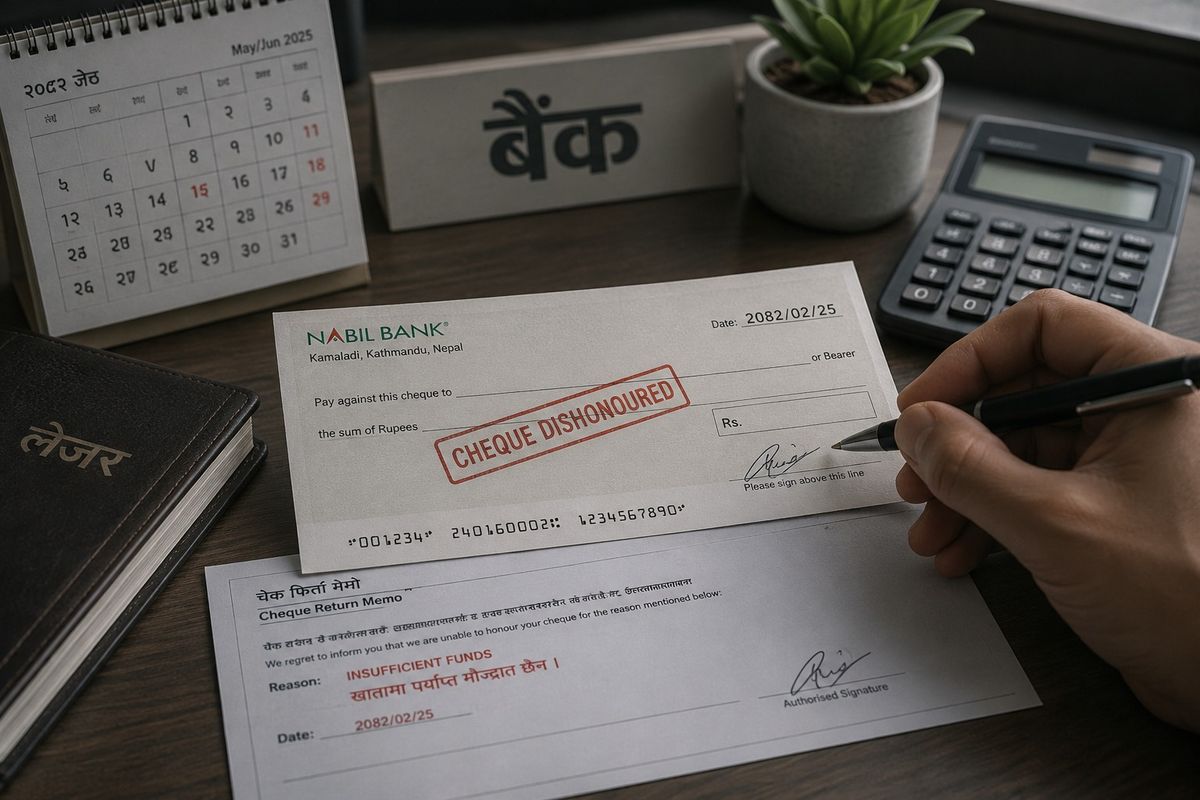
- Cheque dishonor/bounce.
- Court Case or Case at Debt Recovery Tribunal.
Who can be blacklisted?
- Individual/Firm/Company borrowing loan.
- Individual/Firm/Company issuing cheque without sufficient fund.
- Proprietor of Proprietorship firm borrowing loan or issuing cheque without sufficient fund.
- Partners of a partnership firm borrowing loan or issuing cheque without sufficient fund.
- Any guarantor of the loan borrowed by Individual/Firm/Company.
- Directors of a company borrowing loan or issuing cheque without sufficient fund.
- Shareholders holding 15% or more shares in a private or public company.
- Successor who accepts the deceased borrower's property/estate.
What is the consequence of Bank Blacklisting?
- Freezing of existing Bank account for financial transaction.
- Barred from further borrowing bank loan.
- Barred from opening new bank account.
- Barred from public tenders.
How to get delisted?
- Full settlement of the outstanding loan.
- Payment of the cheque amount to the cheque beneficiary, or an earmarked deposit or compromise deed with the beneficiary.
- Loan restructuring or rescheduling.
- Court Case.
Frequently Asked Questions (FAQs)
1. Can I be blacklisted for a bounced cheque even if I didn't intend to defraud anyone?
Yes. Blacklisting for cheque bounce applies whenever a cheque is dishonored due to insufficient funds and remains unpaid after the bank's 45-day notice — intent is not a precondition, though signature-mismatch cases give the drawer a chance to correct the error first.
2. If I am a guarantor, can I be blacklisted even though I didn't take the loan myself?
Yes. Guarantors, directors, partners, and significant shareholders (15%+) can all be blacklisted if the underlying borrower defaults and the institution's recovery process reaches that stage.
3. How much notice do I get before being blacklisted?
In case of Bank and Financial Institution, at least 35 days' written notice, explaining the reason and the consequence of continued non-payment. However, you may only get the notice during cheque dishonor process but not during blacklisting in cheque dishonor case leading to blacklisting.
4. Can a blacklisted person still use their bank account?
Only to deposit funds, pay down the loan that caused the listing, pay taxes/government dues, or withdraw limited government-approved subsistence or grant amounts. All other banking transactions are barred.
5. What is the minimum loan amount for blacklisting?
Generally NPR 10,00,000 or more for banks and financial institutions (NPR 5,00,000 for microfinance institutions), though a willful defaulter can be blacklisted regardless of amount.
6. How do I get removed from the blacklist?
By fully repaying the loan or cheque amount, reaching a compromise/restructuring agreement with the lending institution, or through a favorable court/tribunal decision — after which the institution must recommend delisting to CIB.