What is Cheque bounce/dishonor?
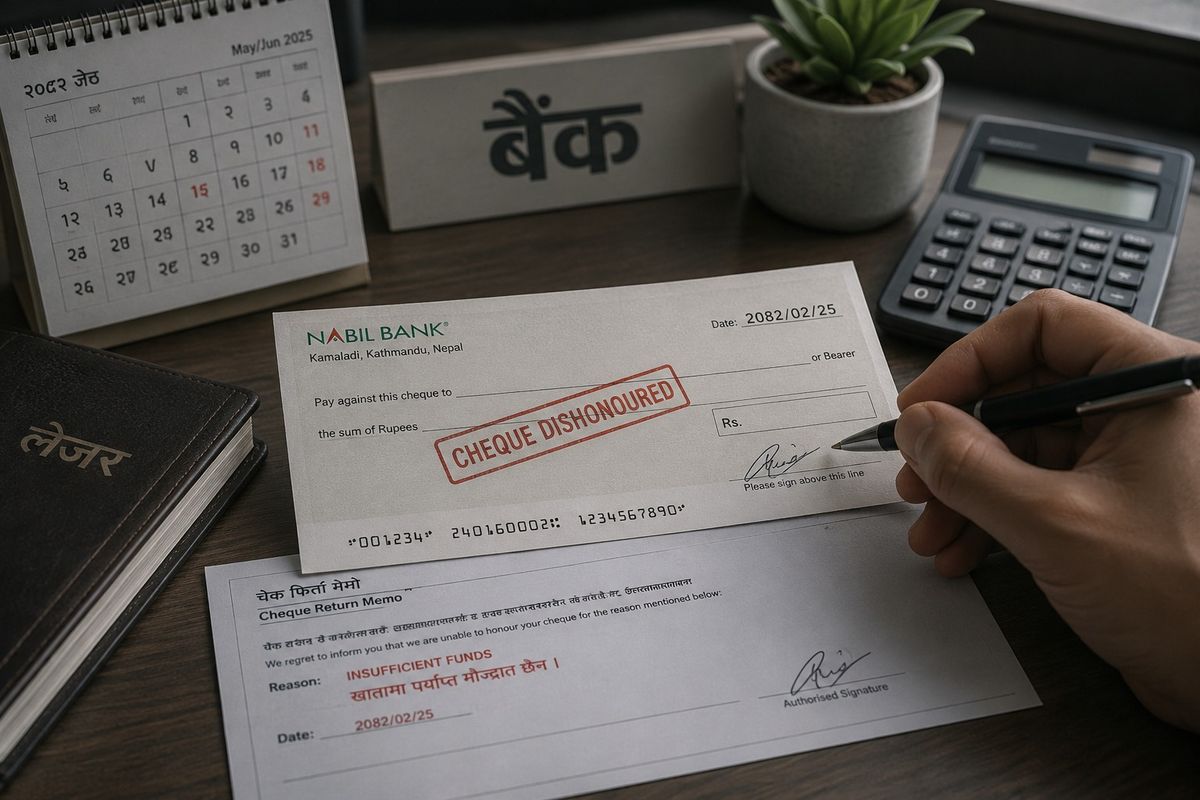
Cheque Bounce/Dishonor is a condition in which a bank and financial institution certify that the amount mentioned in the issued cheque shall not be paid due to Insufficient Fund or any other reasons.
What are the reasons of Cheque bounce/dishonor?
A cheque may be dishonored by a bank for several reasons, including:
- Insufficient Funds — the account does not hold enough balance to cover the cheque amount.
- Bank Account Closed — the drawer's account has already been closed.
- Cheque Date Issues — the cheque is presented more than 6 months after its issue date, or it is post-dated (dated in the future).
- Signature Mismatch — the signature on the cheque does not match the bank's specimen signature.
- Overwriting — the cheque contains overwritten or altered entries.
- Frozen Account — the drawer's bank account has been frozen by a competent authority.
What are the legal provisions governing Cheque bounce/dishonor in Nepal?
Cheque bounce cases in Nepal are governed by the following laws and regulations:
- Banking Offence and Punishment Act, 2064 (2008)
- Procedure for Certifying Cheque Bounce/Dishonor, 2082 (2025)
- Unified Directive for Banks and Financial Institutions
- Muluki Civil Code, 2074 (2017)
How can we certify a Cheque bounce/dishonor?
When a cheque is dishonored, we should the follow the following procedure for certifying Cheque bounce/dishonor:
- The cheque is presented before the concerned bank or financial institution for payment.
- The bank or financial institution returns the cheque, stating the specific reason for dishonor.
- The Cheque Beneficiary (Cheque Holder) submits an application to the bank to formally certify the cheque bounce, along with the original dishonored cheque.
- The bank notifies the Cheque Drawer (account holder) and gives them 45 days to deposit the cheque amount.
- If the cheque amount remains unpaid even after the 45-day period, the bank certifies the cheque bounce/dishonor within 3 days thereafter.
How can we blacklist the Cheque Drawer at the Credit Information Bureau (CIB)?
If the Cheque Drawer fails to pay within the notice period, the Cheque Beneficiary may request that the drawer be blacklisted at the Credit Information Bureau (CIB):
- The Cheque Beneficiary must submit an application for blacklisting within 6 months of the certification of cheque bounce/dishonor.
- The application must include the original dishonored cheque and a copy of the bank's dishonor certification.
- The bank or financial institution forwards the blacklisting request to the CIB within 5 working days.
- The CIB blacklists the concerned Cheque Drawer and informs the bank or financial institution.
- The bank or financial institution then notifies the Cheque Beneficiary that the blacklisting has been completed.
How to File a Cheque bounce/dishonor Case in Nepal?
If the amount remains unpaid, the Cheque Beneficiary can pursue a criminal case:
- File an FIR: The Cheque Beneficiary may file a First Information Report (FIR) at the nearest police station, along with supporting evidence, against the Cheque Drawer — within 1 year of the cheque bounce/dishonor.
- Investigation and Charge-Sheet (within 6 months of the FIR):
- Police investigation
- Issuance of an arrest warrant
- Arrest of the Cheque Drawer
- Submission of the investigation report to the District Attorney
- Filing of the charge sheet at the concerned District Court
- Bail Hearing at the District Court.
- Evidence and witness examination, followed by the final decision of the District Court.
- Appeal to the High Court, if either party is dissatisfied with the decision.
- Execution of the decision once it becomes final.
What are the Punishment for Cheque bounce/dishonor in Nepal?
A person found guilty in a cheque bounce case may face the following consequences:
- Repayment of the full cheque amount to the Cheque Beneficiary.
- Interest on the cheque amount, calculated from the date of issuance to the date of actual payment.
- A 5% fine on the cheque amount.
- Imprisonment, based on the cheque amount (see table below).
Cheque Amount (NPR) | Imprisonment |
|---|---|
Up to Rs. 15,00,000 | 1 month |
Rs. 15,00,000 – Rs. 50,00,000 | 1 – 3 months |
Rs. 50,00,000 – Rs. 1,00,00,000 | 3 months – 1 year |
Rs. 1,00,00,000 – Rs. 10,00,00,000 | 1 – 2 years |
More than Rs. 10,00,00,000 | 2 – 4 years |
Note: In addition to (or instead of) a criminal case, a Cheque Beneficiary may file a civil case to recover the transaction amount. Under Section 476 of the Muluki Civil Code, 2074, a cheque is treated as a deed of transaction thus, can serve as evidence in civil proceedings.
Frequently Asked Questions (FAQs)
1. What is the time limit to file a cheque bounce case in Nepal?
An FIR must be filed within 1 year of the cheque being dishonored. Before that, the beneficiary must first get the dishonor certified by the bank and allow the drawer a 45-day window to pay.
2. Can a cheque bounce case be filed directly with the police, or must the bank process happen first?
The bank certification process (presentation, notice, and 45-day payment window) must be completed first. Only after the cheque remains dishonored can the beneficiary file an FIR with the police.
3. Can I file both a criminal and a civil case for the same cheque bounce incident?
Yes. A criminal case can be pursued under the Banking Offence and Punishment Act, 2064, while a separate civil case for recovery of the transaction amount can be filed under the Muluki Civil Code, 2074, since the cheque itself is treated as evidence of the transaction.
4. What happens if the Cheque Drawer does not pay within 45 days of notice?
The bank certifies the cheque as bounced/dishonored within 3 days after the 45-day period lapses. The beneficiary can then apply for blacklisting at the CIB and/or pursue a criminal case.
5. What is blacklisting, and how does it affect the Cheque Drawer?
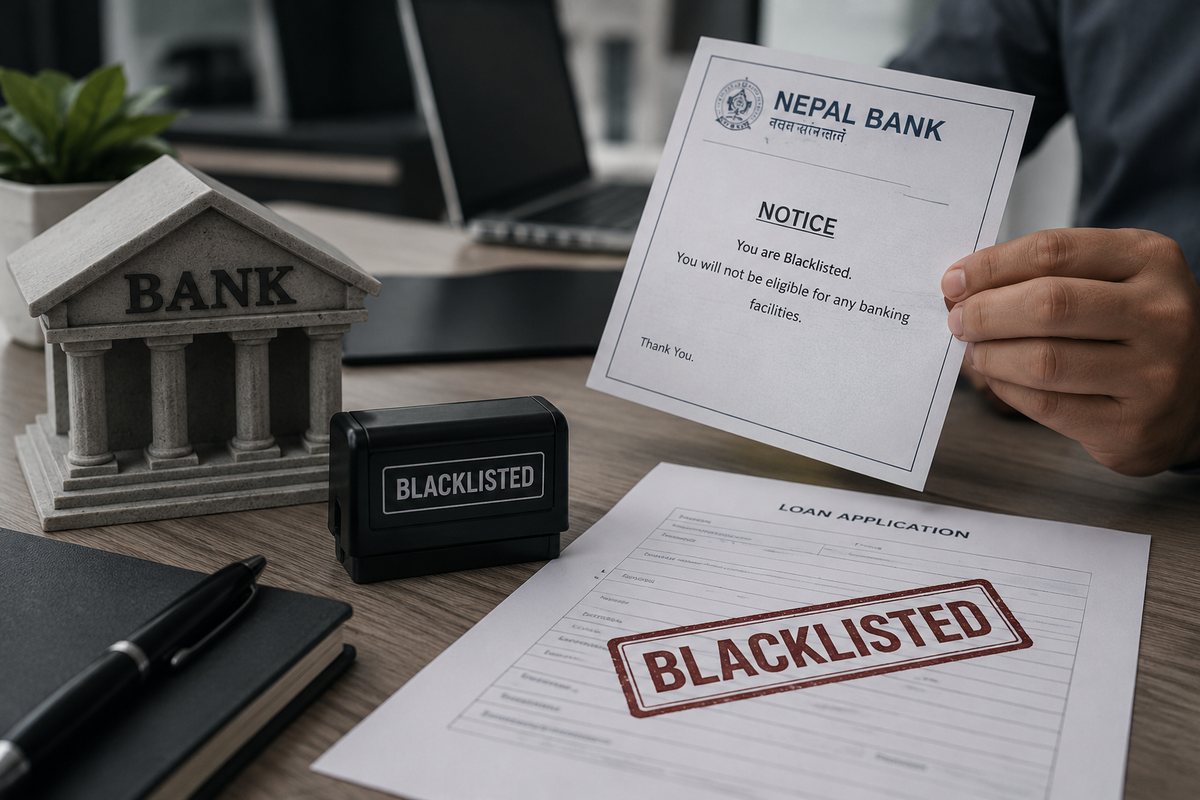
Blacklisting is a record maintained by Nepal's Credit Information Bureau (CIB) that flags individuals who have defaulted on financial obligations, including bounced cheques. A blacklisted person typically cannot access loans or banking facilities from Nepali financial institutions until removed from the list.
6. Is imprisonment mandatory in every cheque bounce case?
Imprisonment terms are prescribed by law based on the cheque amount, but actual sentencing depends on the District Court's final decision after evidence and witness examination.
This article is intended for general awareness. Cheque bounce laws, monetary thresholds, and procedural timelines are subject to amendment — readers should verify current provisions with a legal professional or the relevant regulatory authority before taking action.